
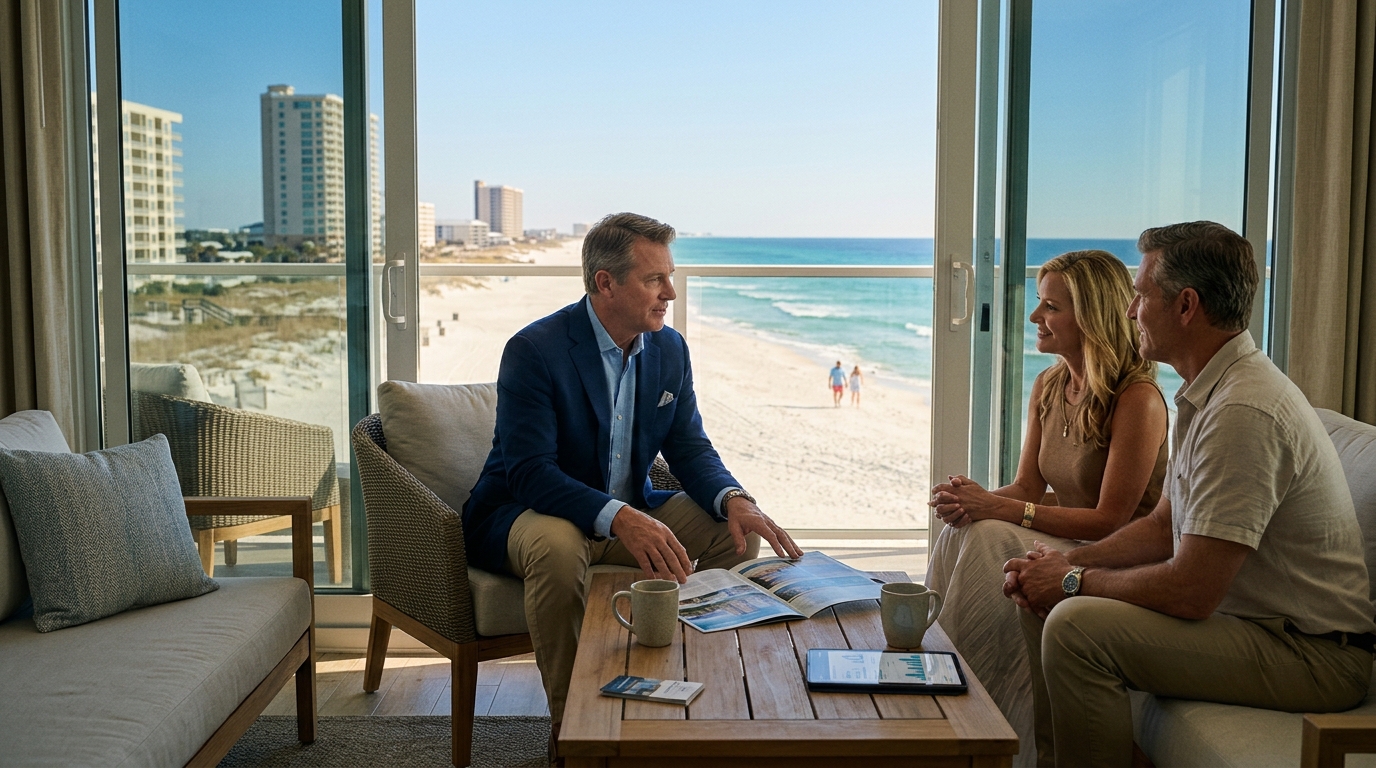
How to Choose an Experienced Realtor for Gulf-Front Condos in 2026
Choosing the right real estate professional for a high-stakes coastal transaction requires more than checking a license number. You need an advisor who understands the specific financial mechanics of shared ownership, from HOA reserve audits to short-term rental zoning. Gulf Coast Investment Property, led by Jonathan R. Bennett, Realtor® and Associate Broker with Beachball Properties, provides the specialized framework needed to navigate the 32-mile front row from Fort Morgan to Orange Beach. This guide covers the critical steps to evaluate, verify, and engage a specialist for your Gulf-front acquisition or sale.
How to Choose: Separating Specialists from Generalists
Real estate specialization is a critical differentiator in the coastal market. A generalist may handle a high volume of suburban single-family homes, but they often lack the granular knowledge required for high-rise condominiums. Coastal real estate specialization is the practice of focusing exclusively on a specific geographic and product niche to provide deeper market intelligence. When evaluating a candidate, look for a track record of transactions specifically within the Gulf-front corridor. You want a professional who audits the balance sheet of the building, not just the view from the balcony.
The Data-Driven Approach
Top-tier advisors use data over emotion. They analyze cap rates, historical occupancy, and reserve funding levels. If a realtor cannot speak to the specific insurance structures of a building like Phoenix West II or The Beach Club, they are likely not the right fit for a high-value investment. The right professional treats your capital with military-grade discipline, ensuring every decision is backed by rigorous financial modeling.
What to Ask: The Due Diligence Checklist
Before signing a listing agreement or making an offer, you must ask the right questions to uncover potential liabilities. The purchase price is just the headline number; the true cost includes the health of the association. Ask your prospective realtor how they handle special assessments and what their process is for reviewing meeting minutes.
Essential Questions for Condo Buyers
- How do you audit the HOA reserve study for the specific building?
- What is the current status of the master insurance policy versus the unit-level HO-6 policy?
- Are there any pending or proposed changes to short-term rental restrictions?
- How do you verify the structural integrity of the building, particularly regarding elevation and pilings?
These questions force the realtor to demonstrate their operational depth. A specialist will have a vetted network of inspectors and attorneys ready to deploy, while a generalist may struggle to coordinate these specific coastal resources.

How to Verify: Validating Credentials and Claims
In a market saturated with marketing claims, verification is your primary defense. Real estate credential verification is the process of confirming a professional's license status, disciplinary history, and actual transaction history through official state records. You should always check the Alabama Real Estate Commission database to ensure the license is active and in good standing. Additionally, look for professional designations that require ongoing education, such as the CCIM (Certified Commercial Investment Member) coursework, which signals a commitment to investment-level analysis.
Checking the Brokerage Structure
It is also vital to understand the brokerage relationship. For example, Jonathan R. Bennett operates as an Associate Broker with Beachball Properties. Understanding this structure ensures you know exactly who is legally responsible for the transaction and how the marketing brand, Gulf Coast Investment Property, functions within that brokerage framework. Transparency in this relationship builds trust and clarifies the chain of command during a complex closing.
How It Works: The Transaction Workflow
Understanding the sequence of a coastal transaction helps you manage expectations and prepare the necessary documentation. The process typically begins with a strategic consultation, followed by a detailed market analysis and property audit. For sellers, this involves a data-driven exit strategy to maximize equity. For buyers, it involves a rigorous due diligence period where the building's financials are scrutinized.
The Timeline of a Coastal Closing
A standard closing can take 30 to 60 days, but complex transactions involving 1031 exchanges or pre-construction units may require more time. The workflow includes coordinating with title companies, lenders, and inspectors. A specialist manages these logistics with precision, ensuring that strict IRS timelines for tax-deferred exchanges are met without error. This level of coordination is what separates a smooth transaction from a stressful one.
What It Costs: Understanding the Fee Structure
Real estate commissions are negotiable, but the value provided should justify the fee. In the Gulf-front market, fees are typically a percentage of the sale price, but the scope of services can vary. A specialist may charge a premium for their ability to audit HOA reserves and provide rental income projections. You should ask for a clear breakdown of what is included in the service package. Does it include marketing, staging, or legal coordination? Understanding the cost drivers helps you compare the value of a specialist against a generalist.
Hidden Costs to Watch For
Beyond the commission, be aware of potential hidden costs such as special assessments or insurance gaps. A good realtor will help you identify these before you close. They will review the association's financials to ensure you are not inheriting a debt that could wipe out your equity. This proactive approach can save you thousands of dollars in the long run.
What Goes Wrong: Common Pitfalls to Avoid
Many buyers and sellers make critical errors that erode their returns. The most common mistake is falling in love with the view before auditing the investment. Another frequent error is ignoring the building's insurance structure. In a coastal environment, windstorm and flood coverage are complex and expensive. If the master policy does not cover certain risks, the individual unit owner may be liable for significant out-of-pocket expenses.
The Danger of Underfunded Reserves
Underfunded reserves are a silent killer of condo equity. If the association has not been saving enough for major repairs, it may levy a special assessment on all owners. This can be a five or six-figure bill that appears without warning. A specialist will pull the reserve study and meeting minutes to identify these red flags early, protecting your investment from unexpected financial shocks.
Versus Alternatives: Specialist vs. Generalist
Choosing between a specialist and a generalist is a strategic decision. A generalist may offer a lower commission, but they may lack the specific knowledge needed to navigate the nuances of the 32-mile corridor. A specialist, like those at Gulf Coast Investment Property, brings deep local expertise and a vetted network of professionals. This network includes title companies, lenders, and property managers who understand the unique challenges of coastal real estate.
| Feature | Generalist Realtor | Coastal Specialist |
|---|---|---|
| Market Focus | Broad geographic area | 32-mile Gulf-front corridor |
| HOA Audit Depth | Basic review | Comprehensive reserve and insurance audit |
| STR Knowledge | General rental trends | Building-specific occupancy data |
| Network | Standard vendors | Vetted coastal professionals |
For Specific Situations: Tailoring the Strategy
Your strategy should change based on your specific goals. If you are a 1031 exchange client, timing is everything. You need a realtor who can identify replacement properties quickly and manage the strict IRS deadlines. If you are a second-home buyer, the focus shifts to lifestyle amenities and long-term appreciation. For an investor, the priority is cash flow and rental yield. A specialist can tailor their approach to your specific situation, ensuring that the property you choose aligns with your financial objectives.
Pre-Construction Opportunities
For those interested in pre-construction, the strategy involves securing early access to premium developments. This requires a realtor with relationships with developers. They can provide insights into the project's timeline, financing options, and potential resale value. This level of access is often not available to the general public, giving you a strategic advantage in the market.
Rules and Protections: Legal and Regulatory Guardrails
Real estate transactions are governed by a complex web of laws and regulations. In Alabama, the Alabama Real Estate Commission oversees the licensing and conduct of real estate professionals. Additionally, federal laws like the Fair Housing Act ensure that all buyers and sellers are treated equally. Understanding these rules protects your rights and ensures a fair transaction. Your realtor is responsible for complying with these regulations, but it is also your right to be informed about them.
Disclosure Requirements
Sellers are required to disclose known material defects in the property. This includes issues with the building's structure, HOA financials, and any pending litigation. A specialist will ensure that all disclosures are made accurately and completely, protecting both parties from future legal disputes. This transparency is a hallmark of professional conduct in the coastal market.
Local Specifics: The 32-Mile Corridor
The Gulf-front market is not a monolith; it is a collection of distinct sub-markets. Gulf-front real estate in this region is defined by its limited supply and high demand. The 32-mile stretch from Fort Morgan to Orange Beach offers unique characteristics in each community. Fort Morgan is known for its low-density, private setting. Gulf Shores offers a vibrant lifestyle with a wide selection of condos. Orange Beach is the premium market, known for its luxury developments and high rental rates.
Community-Specific Insights
Each community has its own set of rules and regulations. For example, some buildings in Orange Beach have strict restrictions on short-term rentals, while others are designed for them. A specialist will know these nuances and help you choose a property that fits your goals. They will also understand the local zoning laws and environmental regulations that affect coastal development. This local knowledge is invaluable in making an informed decision.
Timing: When to Act in the Coastal Market
Timing is a critical factor in real estate. The coastal market has distinct seasons, with peak activity in the spring and summer. However, the winter months can offer opportunities for motivated sellers and less competition. For 1031 exchange clients, the timing is dictated by IRS deadlines, not market seasons. You need a realtor who can act quickly and efficiently to meet these deadlines. A specialist will help you identify the best time to buy or sell based on your specific circumstances and market conditions.
Market Cycles and Opportunities
Real estate markets go through cycles of boom and bust. Understanding where we are in the cycle can help you make better decisions. A specialist will provide insights into current market trends and future projections. They will help you navigate the market with confidence, ensuring that you make decisions that are aligned with your long-term financial goals. This strategic approach is what sets a specialist apart from a generalist. according to La R galante
Results Over Time: Long-Term Asset Management
Real estate is a long-term investment, and the results are measured over years, not months. A specialist will help you develop a long-term strategy for your property. This includes managing the property, optimizing rental income, and planning for future appreciation. They will also help you navigate any changes in the market or regulations that may affect your investment. This ongoing support ensures that your property continues to perform well over time.
Building Wealth Through Coastal Real Estate
Coastal real estate has historically been a strong performer, but past performance does not guarantee future results. A specialist will help you build a diversified portfolio that includes coastal properties. They will provide insights into the best opportunities for growth and income. This strategic approach helps you build wealth over time, ensuring that your investment continues to deliver value. The right realtor is a partner in your long-term financial success.
Key Takeaways
- Specialization is key: Choose a realtor who focuses exclusively on the Gulf-front corridor.
- Verify credentials: Check the Alabama Real Estate Commission database for license status.
- Audit the HOA: Always review the reserve study and insurance structure before buying.
- Understand the workflow: Know the timeline and steps involved in a coastal closing.
- Ask the right questions: Use a due diligence checklist to uncover potential liabilities.
- Consider the cost: Understand the fee structure and what is included in the service package.
- Plan for the long term: Develop a strategy for managing and growing your investment.
Frequently Asked Questions
What is the most important credential to look for in a coastal realtor?
An active license in good standing with the Alabama Real Estate Commission is the baseline. However, designations like CCIM or a focus on investment properties are strong indicators of expertise in high-value transactions.
How do I verify if a realtor is a specialist in Gulf-front condos?
Review their transaction history for specific buildings in the 32-mile corridor. Ask for examples of HOA audits they have performed and their experience with short-term rental regulations in the area.
What is a special assessment in a condo building?
A special assessment is a one-time charge levied by the HOA to cover unexpected expenses, such as major repairs. It is a significant financial risk for owners and should be carefully evaluated during due diligence.
How long does it take to close on a Gulf-front condo?
A standard closing takes 30 to 60 days. However, complex transactions involving 1031 exchanges or pre-construction units may take longer due to additional regulatory and development timelines.
Can I negotiate the real estate commission?
Yes, commissions are negotiable. However, you should consider the value of the services provided, such as HOA audits and market analysis, when negotiating the fee.
What is the difference between a master policy and an HO-6 policy?
A master policy covers the building's common areas, while an HO-6 policy covers the interior of the unit. Understanding the gap between these two policies is crucial for ensuring adequate insurance coverage.
Conclusion
Selecting the right realtor for your Gulf-front condo transaction is a critical decision that can impact your financial future. By focusing on specialization, verifying credentials, and understanding the local market, you can make an informed choice. Gulf Coast Investment Property offers the expertise and resources needed to navigate this complex market with confidence. To begin your strategic acquisition or sale, for a private consultation.