

What Should I Know Before Investing in Beachfront Condos on the Gulf Coast?
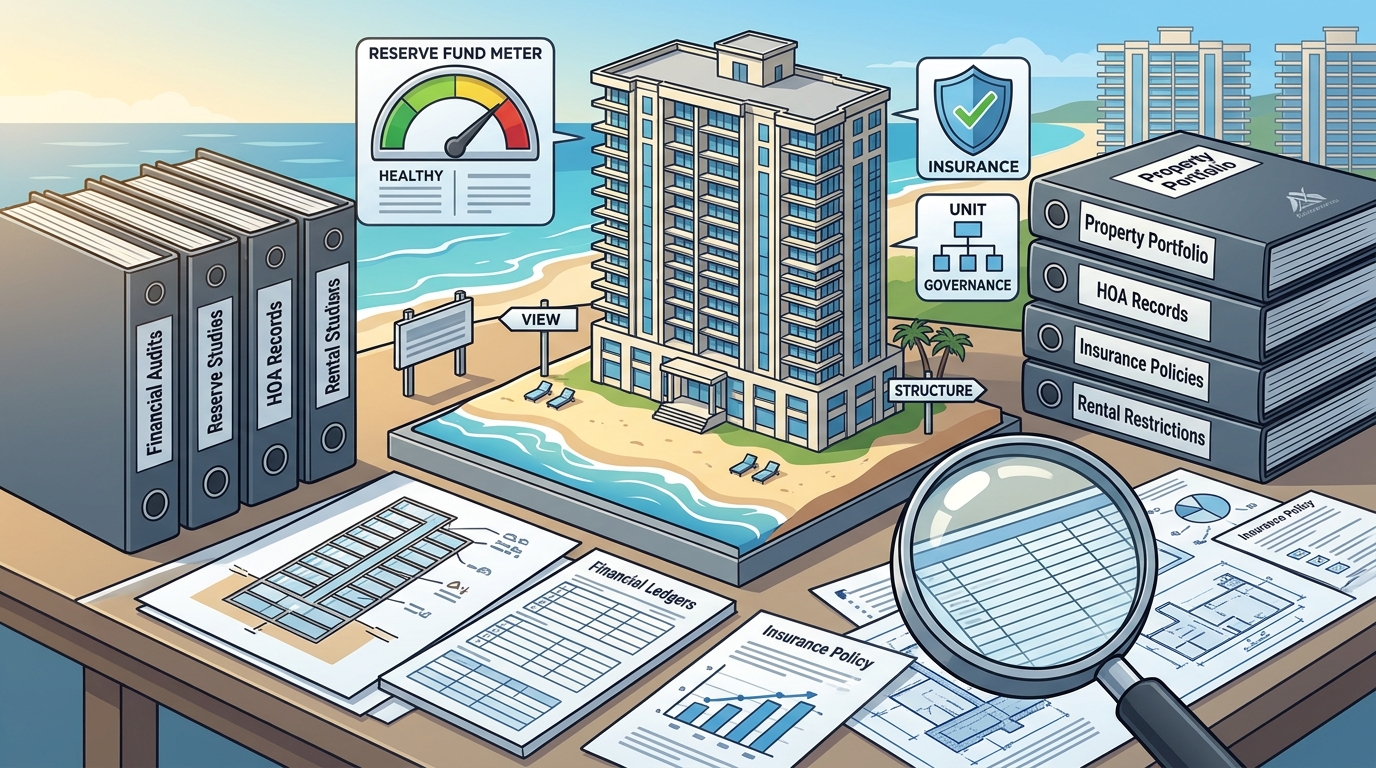
Before investing in beachfront condos on the Gulf Coast, you must audit the building's financial health, verify insurance coverage, and confirm rental restrictions. A condo is a shared asset, meaning the association's reserve funds and governance directly impact your equity and resale value. At Gulf Coast Investment Property, we emphasize that the view is secondary to the balance sheet. Understanding these structural and financial components is critical for protecting your capital in this specialized market.
The Financial Health of the Association
When you buy a condominium, you are purchasing a unit and a stake in the building's collective assets. The strength of the association's reserves determines its ability to handle major repairs without levying special assessments on owners. A healthy reserve fund is a buffer against unexpected costs, such as elevator replacements or roof repairs. If the reserves are underfunded, owners may face sudden, significant financial obligations that can erode your investment returns.
Condominium reserve study is a detailed engineering and financial analysis that estimates the useful life of common elements and the cost to repair or replace them. This document is essential for understanding the long-term financial trajectory of the building. Investors should review the most recent reserve study to identify any deferred maintenance issues. A building with a robust reserve plan is generally a safer investment than one that relies on special assessments to fund routine upkeep.
Insurance and Risk Management
Coastal properties face unique risks, including windstorms, flooding, and salt air corrosion. Insurance for Gulf-front condos is complex and often more expensive than for inland properties. The master policy typically covers the building's structure and common areas, while individual owners are responsible for their unit's interior and personal property. Understanding the gap between the master policy and your individual coverage is vital to avoid underinsurance.
Windstorm coverage is a critical component of coastal insurance. Many standard policies exclude wind damage or impose strict deductibles. Investors must verify that the association's master policy includes adequate windstorm coverage and that the building's construction meets current building codes. In some cases, individual owners may need to purchase supplemental windstorm policies. This layer of protection ensures that a major storm event does not result in a catastrophic financial loss for the building or its owners.
Rental Restrictions and Zoning
Not every condominium building allows short-term rentals, and those that do often have specific rules. Rental restrictions can limit your ability to generate income, affecting the overall return on investment. Some buildings prohibit rentals entirely, while others require a minimum stay of 30 days or mandate that the unit be owned by a resident. These rules can change over time, so it is essential to review the current bylaws and any recent amendments.
Zoning and local ordinances also play a role in rental operations. Municipalities may impose licensing requirements, occupancy limits, or noise regulations on short-term rentals. Investors should confirm that the building's rental policies align with local laws and their own investment goals. A property that appears to be a strong rental candidate may become a liability if the association tightens its rules or if local regulations change. Due diligence in this area can prevent costly surprises after closing.
Location and Market Dynamics
The Gulf Coast is a diverse market with distinct sub-markets, each offering different investment opportunities. Orange Beach is known for its upscale amenities and strong rental demand, while Gulf Shores offers a more vibrant, high-traffic environment. Fort Morgan provides a quieter, more private setting with lower entry prices. Understanding the specific dynamics of each area is crucial for selecting a property that aligns with your investment strategy.
Location affects not only rental income but also resale value and appreciation potential. Properties in high-demand areas with limited supply tend to hold their value better during market downturns. Investors should consider factors such as proximity to amenities, beach access, and local infrastructure when evaluating a property. A well-located condo in a growing market can offer both lifestyle benefits and financial upside, making it a compelling addition to a diversified portfolio.
Key Takeaways
- Audit the association's reserve funds to ensure they are adequately funded for future repairs.
- Verify that the master insurance policy includes comprehensive windstorm and flood coverage.
- Review rental restrictions and local zoning laws to confirm your ability to generate income.
- Understand the specific dynamics of the sub-market, as location significantly impacts value and demand.
- Consult with local professionals to navigate the complexities of coastal real estate investments.
Frequently Asked Questions
What is a special assessment in a condominium?
A special assessment is a one-time charge levied on unit owners to fund major repairs or capital improvements that are not covered by the regular budget or reserve funds. These charges can be significant and should be a key consideration when evaluating a condo investment.
How do I check if a condo allows short-term rentals?
You should review the condominium's bylaws, rules, and regulations, which are typically available from the association or your real estate agent. Additionally, local municipal ordinances may impose restrictions on short-term rentals, so it is important to verify both building and local rules.
What is a reserve study?
A reserve study is a long-range financial plan that estimates the cost and timing of future repairs and replacements for the building's common elements. It helps the association plan for major expenditures and maintain adequate reserve funds.
Why is windstorm insurance important for Gulf Coast condos?
Windstorm insurance is critical because coastal properties are exposed to severe weather events. Adequate coverage protects the building and its owners from significant financial losses due to wind damage, which is a common risk in the Gulf region.
How does location affect condo investment returns?
Location influences rental demand, resale value, and appreciation potential. Properties in high-demand areas with limited supply and strong amenities tend to perform better financially, making location a primary driver of investment success.
What should I look for in a condo's insurance policy?
You should look for comprehensive coverage that includes windstorm, flood, and liability protection. Ensure that the master policy covers the building's structure and common areas, and that your individual policy covers your unit's interior and personal property.
Can rental rules change after I buy a condo?
Yes, condominium associations can amend their bylaws and rules, including those related to rentals. It is important to monitor association meetings and communications to stay informed about any changes that may affect your investment.
How do I find a reliable property manager for my condo?
Research local property management companies with experience in the specific building and market. Ask for references, review their track record, and ensure they understand the building's rules and local regulations. A reliable manager can maximize your rental income and minimize operational headaches.Next Steps for Your Investment
Investing in beachfront condos on the Gulf Coast requires a disciplined approach to due diligence. By focusing on the financial health of the association, insurance coverage, rental restrictions, and location, you can make informed decisions that protect your capital and enhance your returns. At Gulf Coast Investment Property, we provide the strategic guidance and local expertise you need to navigate this complex market. To begin your investment journey, for a personalized consultation.