
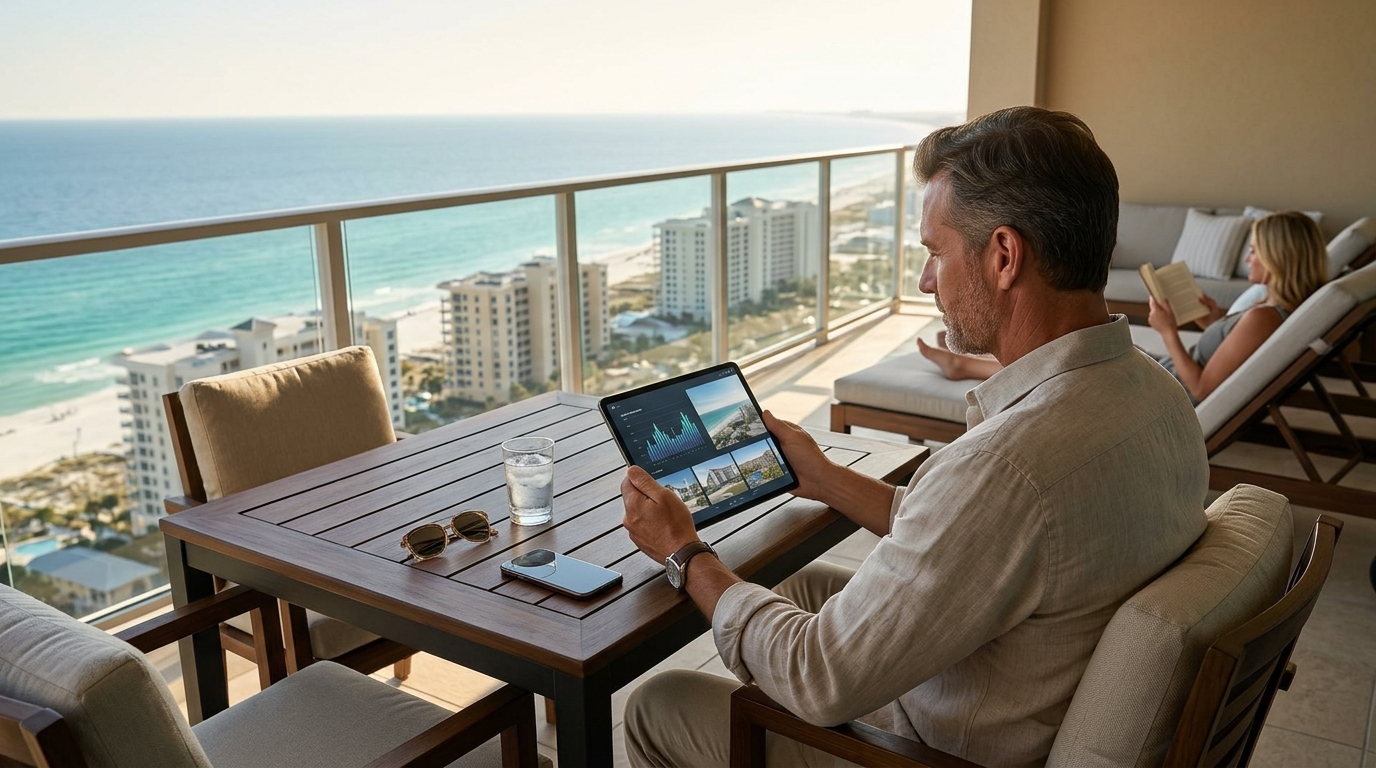
Buying a short-term rental condo in Orange Beach or Gulf Shores from out of state is now standard practice for many investors. The core difference between remote and in-person purchasing is not the physical location of the buyer, but the depth of due diligence and the quality of the local advisory team. Remote buyers rely on data, virtual tours, and trusted local agents to audit the asset. In-person buyers rely on physical inspection and local intuition. For high-net-worth investors, a remote purchase guided by a specialized local expert often yields better financial clarity than a casual in-person visit.
The Remote Purchase Model
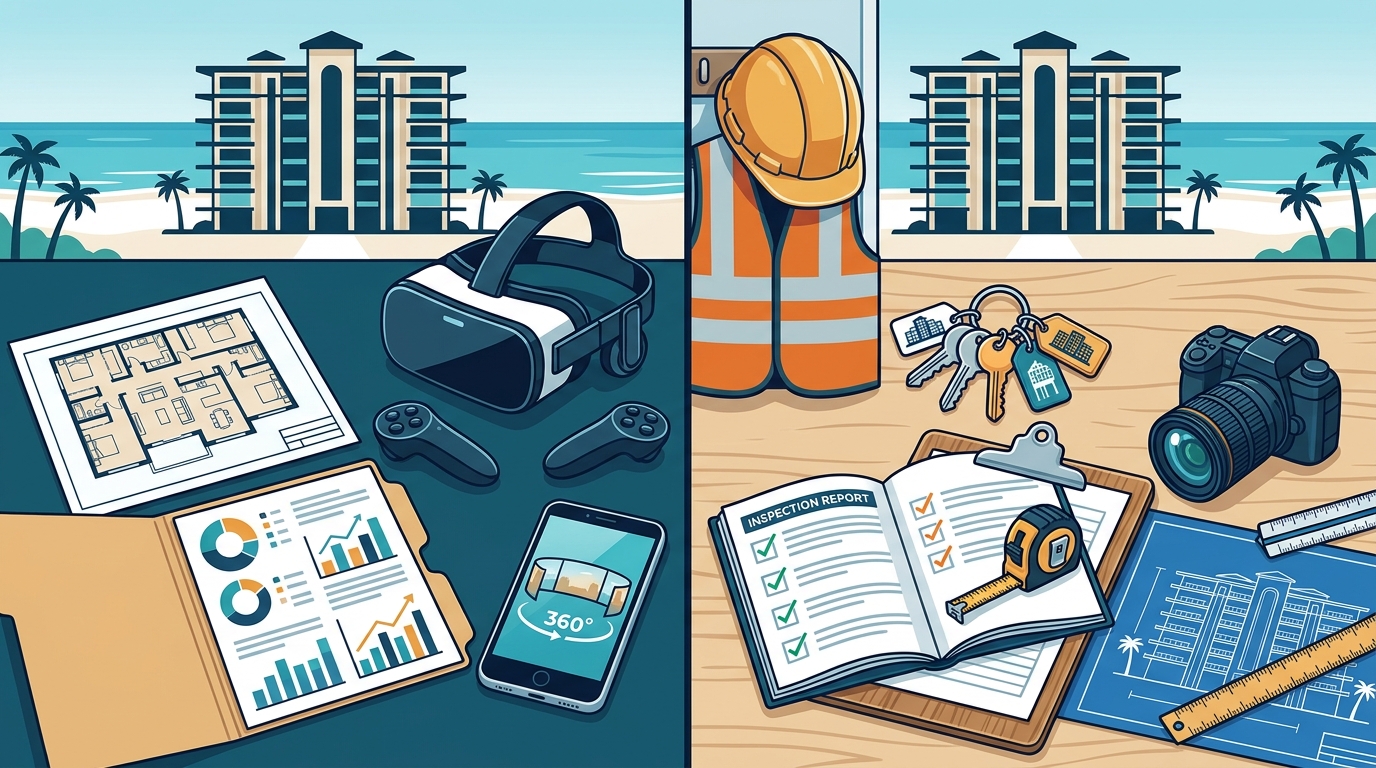
Remote purchasing is the process of acquiring real estate without physically visiting the property, relying instead on digital tools and local professional networks. For investors targeting the 32-mile Gulf-front corridor from Fort Morgan to Orange Beach, this method has become the dominant strategy. The primary advantage is access to rigorous financial data that is often overlooked by casual buyers. A remote buyer working with a specialist can audit HOA reserves, review historical short-term rental occupancy data, and analyze cap rates before ever stepping foot on the property.
The limitations of remote purchasing are primarily sensory. You cannot feel the humidity, hear the building's mechanical systems, or assess the immediate neighborhood vibe through a screen. However, these limitations are mitigated by high-definition 4K video tours, drone mapping, and structural inspections conducted by vetted local professionals. The remote model suits investors who view real estate as a financial asset rather than a lifestyle purchase. It requires a high level of trust in the local agent's ability to filter out noise and present only material financial facts.
The In-Person Purchase Model
In-person purchasing involves physically touring properties, meeting with local vendors, and making decisions based on direct sensory experience. This approach is often preferred by second-home buyers who prioritize lifestyle fit over pure investment metrics. Walking through a unit allows a buyer to assess the quality of finishes, the size of the balcony, and the proximity to amenities like pools or beach access. The primary strength of this model is the reduction of uncertainty regarding the physical condition of the asset.
The limitation of in-person purchasing is the potential for emotional bias. Buyers often fall in love with the view before reviewing the balance sheet. This can lead to overlooking critical financial red flags, such as underfunded HOA reserves or restrictive rental rules. Furthermore, in-person buyers often lack the local network to efficiently coordinate inspections, title searches, and closing logistics. For investors, the in-person model can be less efficient if the buyer is not accompanied by a strategic advisor who forces a data-driven review of the property.
Remote vs. In-Person Comparison
| Criteria | Remote Purchase | In-Person Purchase |
|---|---|---|
| Due Diligence Depth | High, if guided by a data-driven advisor | Variable, often focused on aesthetics |
| Time Efficiency | High, allows for broad market screening | Low, requires travel and scheduling |
| Emotional Bias | Low, decisions based on financial metrics | High, prone to view-driven decisions |
| Local Network Access | Dependent on agent's vendor relationships | Direct, but often limited to generalists |
| Best For | Short-term rental investors, 1031 exchanges | Second-home buyers, lifestyle purchasers |
Choosing the Right Approach
Choose remote purchasing if you are an investor focused on cash flow, cap rates, and long-term appreciation. This approach is ideal for buyers executing 1031 exchanges or acquiring pre-construction units where the physical product is not yet built. It is also the preferred method for out-of-state buyers who need to manage strict IRS timelines and require a local team to handle logistics with precision.
Choose in-person purchasing if you are buying a second home for personal use and lifestyle fit is your primary driver. If you plan to use the property for more than 120 days a year, the physical experience of the space matters more than the rental yield. However, even in-person buyers should engage a local specialist to ensure they are not overpaying for a view while ignoring the financial health of the condominium association.
Frequently Asked Questions
Can I buy a Gulf-front condo without visiting it?
Yes, many investors successfully purchase Gulf-front condos remotely. This requires a trusted local agent who can provide comprehensive data, including HOA financials, rental history, and high-quality video tours. The key is ensuring the local team has the expertise to audit the asset on your behalf.
What are the risks of buying remotely?
The primary risk is relying on an agent who does not perform deep due diligence. If your agent only shows you the view and not the balance sheet, you may miss critical issues like special assessments or insurance gaps. Working with a specialist who audits condo associations mitigates this risk.
Is remote buying better for 1031 exchanges?
Remote buying is often more efficient for 1031 exchanges because it allows for faster decision-making. Since 1031 exchanges have strict IRS timelines, the ability to screen and close on properties without travel delays is a significant advantage. A local advisor can manage the logistics while you focus on the financial strategy.
Do I need to visit the property for a second home?
While not strictly required, visiting a second home is recommended to ensure lifestyle fit. You want to be comfortable with the neighborhood, amenities, and daily living experience. However, you should still perform full financial due diligence before making an offer, regardless of whether you visit in person.
How do I verify HOA reserves remotely?
Your local agent should request the HOA's reserve study and financial statements directly from the association. A specialized advisor will review these documents to ensure the reserves are adequately funded and that there are no pending special assessments. This is a critical step in any remote purchase.
Can I use a virtual tour for a pre-construction purchase?
Yes, virtual tours and architectural renderings are standard for pre-construction purchases. Since the building is not yet built, a physical visit is impossible. You must rely on the developer's reputation, the agent's analysis of the project's financial viability, and the strength of the HOA structure.
Conclusion
The choice between remote and in-person purchasing depends on your investment goals and risk tolerance. For investors focused on financial performance, the remote model, when guided by a specialized local expert, offers superior efficiency and data-driven decision-making. For lifestyle buyers, the in-person model provides the sensory confirmation needed for a second home. At Gulf Coast Investment Property, we help clients navigate both approaches with the same level of rigor. Whether you are in the room or across the country, we ensure you are auditing the investment, not just the view. To begin your strategy session, .